Showing posts with label GEO World. Show all posts

Thursday, July 9, 2009

Michael Jackson's body full of needle marks

Thursday, July 9, 2009
LOS ANGELES: Michael's body was filled with injection marks at the time of his death. It is speculated that the singer may have had an injection of the drug Propofol, a powerful anesthesia.

The dangerous medication was found in MJ's house after his death, and various medical experts have said there is absolutely no medical justification for Michael to have had this drug in his home. It is used to put people under before surgery and is administered through an IV.

It seems Michael wanted to use the drug to cure his insomnia -- and that he had been a bit of an anesthesia junkie. Sources say the LAPD has asked the DEA to assist them in its investigation into multiple doctors who may have treated Michael and prescribed Propofol.

And, if it is found that a shot of the drug is what caused Michael to go into cardiac arrest and die, serious criminal charges could be filed against the doctor who gave it to him.

Taliban’s resistance getting stronger: Mullen

WASHINGTON: The Chairman of the Joint Chiefs of Staff said Wednesday that the U.S. needs to turn around the conflict in Afghanistan within the next year and a half.

Admiral Michael Mullen, speaking at an event at the National Press Club in Washington, said that while he can't yet be sure how much longer U.S. troops will be needed in the war torn country, the time frame to see success of President Barack Obama's new strategy is fairly short.

"I believe we have to start to turn the tide with respect to the Taliban in the next 12 to 18 months," he said.

And although U.S. enemies in Afghanistan, including al Qaeda, have grown increasingly sophisticated, Mullen said he was confident that U.S. forces would meet that goal.

"The forces that we have, the strategy that we have and the approach that we have will allow us to do that," he said.

One of the key differences, Mullen said, is that commanders on the ground now have the full support and resources they need to do the job. His remarks come almost a week after thousands of Marines launched a new offensive in Taliban-controlled southern Afghanistan.

"In Afghanistan, while we have been there since 2001, it's been an under-sourced effort for a significant period of time," he said. "Now with what we've learned, particularly with counterinsurgency and what it takes, what we've learned in Iraq, we apply those lessons in Afghanistan."

He added, "We are now resourcing it to the needs of the commander on the ground. We just hadn't done that. We're really just starting to do that this year."

Mullen said that U.S. troops were focused on providing security to the Afghan people, with an additional emphasis on development by the increased civilian presence in the country as well.

An added regional emphasis, recognizing that the situation in Afghanistan is tied closely with Pakistan is another encouraging change, Mullen said.

However the U.S. has to walk a fine line in terms of the number of troops it deploys to the country.

"All of us are concerned about having the right level footprint but not getting to the point where it looks like we're an occupying force," he said. "If we get to that point it isn't going to work."

The task of defeating the Taliban won't come easily or without cost though, Mullen warned, as the enemy is using increasingly sophisticated tactics for their attacks with improved improvised explosive devices.

"This is an enemy that's very adaptive and very capable," he said. "Particularly in Helmand Province where 4,000 [Marines] launched an operation just a few days ago, that's going to be a very tough fight."

US to host March nuclear security summit: WH

L'AQUILA: US President Barack Obama will invite leaders from 25-30 countries to a March 2010 global summit on securing nuclear materials and battling atomic smuggling, the White House said Wednesday.

Obama is hosting the gathering because he "believes nuclear terrorism is the most immediate and extreme threat to global security," Mark Lippert, chief of staff of the US National Security Council, told reporters on a conference call.

The summit's key goals will be securing vulnerable stockpiles of nuclear materials from theft and boosting global cooperation to combat the trafficking of atomic materials and know-how, said Lippert.

Obama, in this Italian town for the annual Group of Eight summit, floated the idea on Monday during talks with Russian President Dmitry Medvedev and suggested "the strong possibility" that Moscow would host a follow-up summit.

"We think this is another important piece of the non-proliferation agenda that the president has put forward," the US official said, adding that the gathering aimed to broaden Washington's "robust" bilateral arrangements on that front to a more multi-nation approach.

Rape linked to manhood in South Africa

MULDERSDRIFT: Dumisani Rebombo had not been circumcised, did house chores considered girls' work and was sick of being taunted for not being a man. So he took the only other course considered ``manly'' in his rural South African village: He raped a girl.

He was 15, the victim younger. Twenty years later he searched for the woman to beg her forgiveness — a rarity in a nation where a culture of sexual violence is deeply embedded in society.

Rebombo agreed to share his story with The Associated Press as researchers presented findings Thursday at an international conference outside Johannesburg that more than one in four South African men surveyed admitted to committing rape.

South Africa has one of the highest incidences of rape anywhere. Police reports show some 36,000 women were raped in 2007 — nearly 100 per day. But many attacks go unreported because of the stigma and trauma.

``Rape is an expression of male sexual entitlement,'' said Rachel Jewkes, chief researcher of the survey. ``South Africa is an immensely patriarchal society. The history of the country has shaped the dominant forms of South Africa's racially defined masculinities.''

Preliminary findings of the report, carried out by the respected government-funded Medical Research Council and released last month, were met with horror. But many gender and human rights activists were not surprised.

``This tells the story of many boys, of many men,'' said Rebombo, now a 48-year-old divorced father of three.

His experience underscores the deep cultural roots of the problem in a country blighted by violent crime and the devastating emotional, social and economic legacy of apartheid's brutal racial segregation.

When Rebombo was a teen, he was cruelly taunted for not being ``a man.''

Circumcision is considered a rite of passage in some tribes — but his father had almost been killed in the often unsanitary and brutal operation, and swore his son would not be abused that way. So Rebombo was subjected to daily, constant jeering. ``I was viewed as not man enough,'' said the large, soft-spoken man.

One way to prove manhood was rape. Other boys pressured Rebombo to ``teach a lesson'' to one girl who did not want to go out with them. He resisted, fearful of his religious parents and their good standing in the community. Then he relented and a date was set. That Saturday, Rebombo was plied with beer and marijuana to overcome his trembling.

``I had difficulty breathing ... I had never had sex before. I was terrified.''

The girl was brought to a field and Rebombo and another boy were left with her.

``He started raping her. She fought him. I was just there, dizzy with all the stuff. He just stood up and said: 'Your turn.' I was there on top of her,'' he said, making a rocking motion with one hand.

Afterward, ``she just ran home,'' said Rebombo. He said he could not even recall after the rape if he had had an erection.

Guilty, and fearful she would tell, he avoided her and a year later moved to another village.

In Johannesburg in 1996, working for a faith-based organization involved with unemployed mothers, he was struck by the women's tales of abuse and bruises testifying to it. He started working with men to help stop the violence.

``That forced me to do my own introspection,'' he said. ``I felt I needed to go find her and apologize.''

So he went back to his village and tracked the woman down. ``I told her what I did those years back was wrong and I am here to ask for forgiveness.''

Through sobs, she told Rebombo she had since been raped by two other men. Married with children, she kept the assaults secret, but sometimes cringed when her husband touched her. Her life had never been the same, she said.

But she accepted Rebombo's apology and forgave him, saying it was difficult.

She also left him a task. ``She told me: 'Maybe you could teach other men out there not to do the same thing.'''

Today, Rebombo works for the Olive Leaf Foundation, helping parents and children deal with challenges including HIV/AIDS, abuse and sexual violence.

``If more men would stand up and say 'This is wrong,' the better we can fight this carnage,'' he said.

Rape in South Africa is ``deeply embedded in ideas about manhood,'' according to the study presented at the conference outside Johannesburg.

Researchers at this week's conference acknowledged the sexism inherent in most cultures but highlighted the strong patriarchal nature of African culture.

In South Africa, many blame the rape statistics on the violence, repression, poverty and psychological degradations of the white supremacist, apartheid regime that ended 15 years ago.

``Apartheid made violence an instrument of control and violence became the norm,'' said gender rights activist Mbuyiselo Botha. ``Men would feel emasculated.'' Angry and humiliated, they took out their frustrations then — and still today — on the weakest victims, women and children, activists say.

Some 5.2 million of South Africa's 50 million people are infected with the AIDS virus — the highest rate in the world.

Despite one of the world's most advanced constitutions on human rights, traditional attitudes demeaning women persist and are perpetuated by the words and actions of leading figures in South Africa.

President Jacob Zuma, a proud polygamist with three wives, was acquitted of rape in 2006, but only after he acknowledged having unprotected sex with the HIV-positive daughter of a family friend.

Zuma's remarks about women, sex and Zulu culture caused major controversy and there were ugly scenes outside the courtroom with his supporters burning pictures of the woman.

While Zuma now speaks against violence against women, the trial did ``tremendous damage'' to efforts to encourage more modern attitudes toward women, Botha said.

``Fifteen years into democracy one had begun to think that life had started to normalize. This was a wake-up call.''

Chief researcher Jewkes said rape in South Africa was ``significantly associated'' with childhood trauma and ``abnormal'' family structures caused by one or the other of the parents being forced to leave the household to seek work.

``Apartheid really destroyed South African families,'' she told AP.

Only a third of the men in their sample said their fathers were often or always at home while two-thirds said their mothers were.

``We know that if children are being raised by relatives they are much more vulnerable to being abused,'' Jewkes said, adding that 60 percent of women who report rape are assaulted by someone they know — with children this figure goes as high as 80 percent.

Researchers, who gave no margin of error, interviewed men from some 1,700 households from a representative cross-section of the population in rural areas in South Africa's Eastern Cape and KwaZulu-Natal provinces.

Daily headlines of rapes point to botched investigations and more humiliation for women.

On Monday, the daily newspaper The Star carried a front-page story about a convicted rapist given a four-year jail sentence.

The judge said he was being lenient because the perpetrator was ``well-educated'' and his victim was ``a grown-up woman'' who had been hitchhiking.

Pakistan displaced 'can go home'

Pakistani Prime Minister Yousuf Raza Gilani has called on people displaced by fighting against the Taliban in the north-west of the country to go home.

He said that the first phase of a four-part programme to return them would begin on 13 July.

It is the first time the PM has made such a call since the army offensive against the Taliban began in April.

The army, meanwhile, says that its operation in Malakand has entered its final phase.

Mr Gilani said that militants had already been "cleared" from Swat, Buner and part of Upper Dir.

Several hundred families from those areas have already begun to return to their homes, officials say.

'No return'

"The electricity has been restored, the gas has been restored, the gas stations have been restored and even the banks have been restored," Mr Gilani said in a news conference.

"I congratulate the nation that from 13 July the displaced people will start returning to their homes," he said.

He said that the army would remain in the valley to ensure the Taliban did not return.

The BBC's M Ilyas Khan in Islamabad says that about two million people have been officially displaced since fighting resumed in April, with as many as 500,000 more who are not officially registered or are without proper identification.

Plans drawn up by the army's Special Support Group envisage the first batch of displaced people - those living in camps - will return on 13 July.

They will then be followed by those living in government buildings - including schools - and then by those living with friends and relations. The final group of people scheduled to return are those who have moved away from north-west Pakistan.

Our correspondent says that the overwhelming majority of displaced people either live in government buildings or schools, or are being looked after by what are called "host families" in Swabi and Mardan.

The army says that it it continuing to inflict heavy casualties on the Taliban in the north-west. On Wednesday it said that senior Taliban leader Maulana Fazlullah had been wounded in the fighting.

On Thursday it said that another Taliban leader, Omar Zadah, had been killed.

Venezuela Halts Oil Flow to Honduras

Venezuela’s oil minister, Rafael Ramírez, confirmed Wednesday that his country had halted oil exports to Honduras. Mr. Ramírez said shipments of oil, which Venezuela has sold to Honduras at preferential prices, would not resume until that country’s ousted president, Manuel Zelaya, was reinstated. Mr. Zelaya is an ally of President Hugo Chávez of Venezuela. Venezuela sends about 20,000 barrels of oil a day to Honduras; the cutoff is expected to raise fuel costs in Honduras.

Wednesday, July 8, 2009

Pakistan: Taliban buying children for suicide attacks

Wednesday, July 8, 2009
ISLAMABAD, Pakistan (CNN) -- A top Taliban leader in Pakistan is buying and selling children for suicide bombings, Pakistani and U.S. officials said.

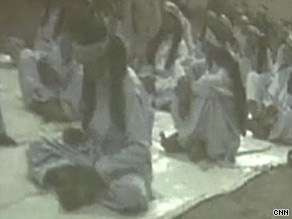
Taliban leader Baitullah Mehsud has been increasingly using the children in attacks, the officials said. A video released by Pakistan's military shows the children training for the task.

In the video of a training camp, children can be seen killing and going through exercises.

Mehsud has been selling the children, once trained, to other Taliban officials for $6,000 to $12,000, Pakistani military officials said.

Some of the children are as young as 11, the officials said.

"He has been been admitting he holds a training center for young boys, for preparing them for suicide bombing. So he is on record saying all this, accepting these crimes," said Major General Akhtar Abbas, spokesman for the Pakistani army.

The young suicide bombers may be able to reach targets unnoticed, the military said.

"If he is approaching on foot, there is a possibility he will bypass security," Abbas said.

"In certain areas, there is a possibility in the population centers everyone can not be checked physically, so he can create havoc there."

Pakistan has launched an offensive against the Taliban, started in the Swat region of the North West Frontier Province. The Taliban have countered with a spate of suicide bombings, including a July 2 attack in Rawalpindi, in which a suicide bomber on a motorcycle struck a Pakistani Defense Ministry bus. At least one person was killed and 29 others were wounded.

Pakistan's army said it is hunting Mehsud in the hopes that the supply of suicide bombers will dry up after the Taliban leader is captured.

Meanwhile, a suspected U.S. drone attack killed at least 12 people and wounded five others in northwest Pakistan Tuesday, Pakistani officials said.

The missile strikes in South Waziristan targeted a suspected Taliban hideout at a madrassa, or Muslim school, in Zangarah, according to intelligence officials.

The attack near the border with Afghanistan involved a pair of missiles shot from an unmanned drone, local resident Janbaz Mehsud told CNN. He said all the dead and wounded were Taliban.

A local government official, who asked not to be named, said the madrassa was a training center for the Taliban and belongs to Baitullah Mehsud. That official put the death toll at 14, but said the number of dead could rise.

The U.S. military routinely offers no comment on reported drone attacks. However, the United States is the only country operating in the region known to have the ability to launch missiles from drones, which are controlled remotely.

'No green light for Israel to attack Iran'

Washington - President Barack Obama said on Tuesday the United States had "absolutely not" given Israel a green light to attack Iran over its nuclear program, but he said Washington cannot "dictate to other countries what their security interests are."

"It is the policy of the United States to try to resolve the issue of Iran's nuclear capabilities in a peaceful way through diplomatic channels," Obama told CNN in an interview during his trip to Russia.

Vice President Joe Biden said in an interview with ABC's "This Week" program on Sunday that Israel had a sovereign right to decide what is in its best interest in dealing with Iran's nuclear ambitions, a comment seen by some as giving Israel a green light to attack.

Asked if that was the intent of his administration, Obama said: "Absolutely not."

"I think Vice-President Biden stated a categorical fact which is we can't dictate to other countries what their security interests are," Obama said.

"We have said directly to the Israelis that it is important to try and solve this in an international setting in a way that does not create major conflict in the Middle East," he said.

Obama came into office earlier this year hoping to engage Iran in a dialogue to ease tensions between the two longtime rivals, but his efforts have made little progress so far.

The United States views Iran's nuclear enrichment program as a step toward production of atomic weapons, but Tehran insists it is for peaceful energy production.

Israel has said a nuclear-armed Iran would be a threat to its existence, noting Iranian President Mahmoud Ahmadinejad's calls for Israel to be wiped off the map.

The UN Security Council has imposed three sets of sanctions on Tehran for defying its demand to suspend uranium enrichment.

The United States has joined Russia, China, France, Germany and Britain in inviting Iran to talks to resolve the nuclear dispute.

Mystery surrounds Michael Jackson burial location

THE location of Michael Jackson's final resting place remains shrouded in mystery hours after a glittering public memorial to the King of Pop.

Jackson's family had surprised mourners after deciding to put the singer's gold-plated coffin on view at the Staples Centre memorial after a private ceremony at the Forest Lawn mortuary.

However as Jackson's family headed to a five-star Beverly Hills hotel to gather for a post-memorial lunch, the destination of the singer's lavish casket and when, or if, it would be interred was unclear.

A spokeswoman for the family declined to comment as local media reports said the coffin was being taken to an unknown location and would not return to the cemetery in the Hollywood Hills where it had started the day.

More on the Michael Jackson memorial service.

The uncertainty over Jackson's burial plans is likely to fuel speculation that the singer may yet be laid to rest at his beloved Neverland Ranch in the secluded California wine country northwest of Los Angeles.

Although the Jackson family last week quashed plans to hold a public viewing of Jackson's body at the estate, family members remain keen on the idea of Neverland becoming the star's permanent home.

In an interview with NBC television, Jermaine Jackson said Neverland would be a fitting final resting place for the pop star.

"This is his home, he created this. Why wouldn't he be here?" Jackson said.

"I feel his presence. And I love that, and I want my mother to come back here and feel what I feel.

He built this place with love and you can see it and feel it."

One million Facebook members watch live Michael Jackson memorial

ABOUT one million Facebook members worldwide weighed in online with Michael Jackson comments while watching live online video of the revered King of Pop's memorial in Los Angeles.

Facebook "update" messages were fired off at feverish rates, with comments tied to CNN Live video feeds peaking at 6000 per minute, the social networking website said.

"The 6000 is just for CNN Live," said Facebook marketing directory Randi Zuckerberg.

"It is significantly higher than that when you factor in E! Online, ABC, and MTV which each have their own Facebook Connect implementations."

More on the Michael Jackson memorial service.

Facebook users worldwide were sharing updates and thoughts while watching free streaming video of the memorial at CNN Live, ABC, and E! Online websites.

Facebook reported that 759,000 Facebook users watched the memorial event online at CNN Live, with 87,000 others opting for E! Online and 97,000 viewing video feeds at ABC websites. Approximately 21,000 Facebook members watched the memorial online at MTV, according to the popular California-based online social-networking service.

"The most interesting thing is how many people are writing in internationally," Mr Zuckerberg said, referring to Facebook updates from Switzerland, Israel, Britain and Barbados.

"The inauguration was certainly a US-centred event, and the Jackson memorial seems to have a huge international presence."

Facebook posts during the memorial included a user identified as Elycia Cook of Japan saying, "I am at work in my MJ T-shirt trying to get something done between the tears and popping in and off of CNN".

Another Facebook user theorised that in many parts of the world, "nothing will be getting done right now".

Facebook rival MySpace also streamed the memorial event online, but viewer figures were not immediately available.

'Four million watchers a minute'

Online video news traffic in the United States, Europe, and other places around the globe surged above normal during the memorial, according to Akamai Technologies which specialises in delivering data online. At times nearly four million people per minute were watching the event streamed online, Akamai said in postings at Twitter.

"We expected it to be a large global event online and planned accordingly," said Akamai spokeswoman Helen Yang.

Facebook status updates, essentially brief posted thoughts at given moments, related to the Barack Obama inauguration peaked at 8000 per minute at the start of his swearing-in ceremony. A total of 1.8 million Facebook status updates containing the word "Obama" were sent on the day he was inaugurated, according to Facebook.

Michael Jackson Memorial

July 7, 2009 - Stevie Wonder, Janet Jackson, Mariah Carey, Queen Latifah and others close to Michael Jackson attended the late King of Pop's much-publicized memorial service in downtown Los Angeles Tuesday.

The event, broadcast live to the world via television and streaming internet video, was neither the mob scene authorities were expecting nor the bizarre gathering most anticipated, given the 20,000 people gathered inside the Staples Center.

The Associated Press reports that the ceremony was equal parts celebration and mourning, songs and tears. Michael Jackson's memorial was a somber, spiritual ceremony that reached back for the essence of the man.


Jackson's daughter, Paris-Michael, was moved to tears when she took the stage.

One of the more memorable moments was when Jackson's daughter, Paris-Michael, 11, took to the stage and made her first public statement regarding her father's passing.

"Ever since I was born, Daddy has been the best father you could ever imagine," she said, dissolving into tears and turning to lean on her aunt, Janet Jackson. "And I just wanted to say I love him — so much."

More than 3,000 police officers massed downtown to keep the ticketless at bay. The atmosphere inside the arena was very somber, almost churchlike, with the help of a large video screen projecting the image of a stained-glass window behind the stage.


The ceremony began with Smokey Robinson reading statements from Jackson's close friend Diana Ross — "Michael was part of the fabric of my life" — and then Nelson Mandela — "Be strong."

Kobe Bryant, Spike Lee, Wesley Snipes, Lou Ferrigno, Don King, the Kardashian sisters, Magic Johnson, Brooke Shields and Larry King were also on hand for the memorial.

Taliban infiltrate once-peaceful Afghan north

The northern Afghan province of Kunduz is renowned for its mouth-watering melons, rice and almonds.

Kunduzis are likely to remember their province as "the bread basket of Afghanistan" - it was the country's main source of cotton and fruit exports in more peaceful times.

But those memories might be fading fast. A recent spate of attacks by the Taliban and al-Qaeda has altered the face of Kunduz beyond all recognition.
"The Taliban have closed girls' schools in the districts. They collect taxes from people and they have their own courts. The governor was attacked and the Taliban are in the villages. All because Kunduz is ignored by our president and ministers in Kabul," said a group of elders over endless cups of green tea in the provincial capital.

As you drive from Kabul into Kunduz city, it is not long before motorists come across a colourful billboard with a powerful message:

"Last year explosives killed 1,700 and injured more than 2,393 people. That is enough."

In this way, one fact becomes immediately clear to all those entering Kunduz: security is the most pressing concern in this far-flung northern province.

A senior interior ministry official in Kabul agrees the situation is volatile but rejects any accusations that the central government has turned a blind eye towards Kunduz.

"We know that the enemy is there in big numbers and there are also al-Qaeda fighters. We conducted a big operation in Goar Tepa and we will continue to kill and capture them. But we are waiting for people to collect their harvests," said the official, who wished to remain anonymous.

In recent months, Kunduz has felt the consequences of the Taliban presence - a senior Afghan government official was shot dead while driving to the Tajikistan border and four US soldiers were recently killed by a roadside bomb.

Under surveillance

The Taliban have also built a shadowy network of control and influence in the province's villages and districts.

Take for example the strategic district of Char Dara, 30km (18 miles) west of the provincial capital, where the writ of the central government does not extend beyond the district headquarters.

The BBC was recently approached by a local tribal elder from Char Dara district, who made it clear that he wanted the plight of Kunduzis to be known to the world, and offered to take me on a tour of his district.

"We are stuck between the government and the Taliban. Kunduz shouldn't have been left to fend for itself," says the elder, angrily.

We left Kunduz city before dawn, winding our way through a series of dirt trails and bumpy roads. As the sun rose, it revealed our surroundings: unkempt farms stretched into the distance, and we passed several farmers working doggedly in fields of wheat, rice and cotton, their foreheads drenched in sweat.

During our three-hour drive through many of Char Dara district's villages, signs of Afghan government influence were few and far between.

Instead we consistently encountered motorcycle-borne Taliban fighters openly surveying the operations of the district's villages throughout the day.

It was during our first such encounter that my host broke the drive's long silence: "Taliban fighters," he said, indicating with his eyes.

"They are patrolling, but will not stop anyone unless they have intelligence on them."

We drove onwards, passing a gaggle of young boys walking along the roadside towards their school. There was no sign, though, of the district's young girls.

"The Taliban have closed down all the girls schools in the district. They have warned people not to educate their daughters," my host informed me.

A short while later, we stopped in the village of Basoas and I was shown the local girl's school, which was shuttered and padlocked.

Taliban tax

We met 13-year-old Zarmina with her father.

"I work in the fields with my father because our school was closed. I want to be an educated woman but I don't know how I can read and write because my parents are illiterate," said Zarmina with a determined look on her face.

After several hours of driving we arrived at another remote village and local farmers informed the tribal chief that the province was expecting one of its best harvests.

But, they complained, they were being forced to pay the Taliban a 10% usher (religious tax).

"The Taliban come and take our 10% in exchange for resolving our disputes. People don't go to the government because the Taliban control the area," wheat farmer Mohammed Nabi said.

Several farmers went as far as providing me with the documentation and taxation papers to prove this claim.

The governor of Kunduz is open about the Afghan government's failure in his province.

"We don't have enough police to guard the people of our districts. The Taliban are well-resourced.

"They have funding from abroad and though drug-deals. They are able to intimidate people into accepting high rates of taxation and close down schools in places where we don't have any physical presence," he said.

But the governor of the province, Engineer Omar, is confident about the government's preparation.

"We have asked for more police from Kabul and the only reason why we are not going against Taliban is because it's the harvest time and we don't want our people to lose their harvests and this is exactly what the Taliban wants us to do."

Obama tells Russia to move from old ways of thinking

BARACK OBAMA set out his vision for a new post-cold war world yesterday, urging Russia not to interfere in neighbouring states and to move on “from old ways of thinking”.

On his first trip to Russia as US president, Mr Obama called on Moscow to stop viewing the US as an adversary. The assumption that Russia and the US were eternal antagonists was a “20th-century view” rooted in the past, he said.

He delivered a tough, though implicit, critique of Kremlin foreign policy, rejecting the claim that it had “privileged interests” in post-Soviet countries. He said the 19th-century doctrine of spheres of influence and “great powers forging competing blocs” was finished.

“In 2009, a great power does not show strength by dominating or demonising other countries. The days when empires could treat sovereign states as pieces on a chessboard are over,” he told graduates from Moscow’s New Economic School.

“As I said in Cairo, given our interdependence, any world order that tries to elevate one nation or group of people over another will inevitably fail. That is why I have called for a ‘reset’ in relations between the United States and Russia. America wants a strong, peaceful and prosperous Russia.”

Mr Obama acknowledged the US needed to play its part in bringing about a fresh start with Russia – a “great power”.

He paid tribute to the achievements of Russian writers and scientists, even quoting Pushkin when he told the students: “Inspiration is needed in geometry just as much as in poetry.”

Crucially, though, he indicated Washington would not tolerate another Russian invasion of Georgia. Russia has been staging full-scale military exercises next to the Georgian border amid ominous predictions that a second conflict in the Caucasus could erupt this summer.

On Monday, Mr Obama reaffirmed Georgia’s sovereignty – severely undermined by last year’s war and Moscow’s subsequent unilateral recognition of rebel-held Abkhazia and South Ossetia as independent states. Yesterday, Mr Obama defended “state sovereignty”, describing it as “a cornerstone of international order”.

He also said Georgia and Ukraine had a right to choose their own foreign policy and leaders, and could join Nato if they wanted.

Russia is opposed to Ukraine’s and Georgia’s accession and wants the White House to rule out their future membership.

Yesterday Mr Obama responded by saying Nato sought collaboration with Russia, not confrontation.

Earlier, Mr Obama had breakfast with Russian prime minister Vladimir Putin, who many regard as Russia’s real ruler.

Last week, Mr Obama described Mr Putin as having “one foot in the past”. But yesterday he talked to him for 2½ hours – longer than planned and an admission of Mr Putin’s continuing importance.

The meeting, their first, had been “excellent”, Mr Obama said.

However, during his speech, Mr Obama delivered a withering assessment of Putinism. Without mentioning Russia by name, Mr Obama spelled out the US’s commitment to “universal values”.

These included the rule of law, the equal administration of justice, and competitive elections – all missing from Mr Putin’s vertically managed authoritarian state. Mr Obama also stressed the importance of “independent media in exposing corruption at all levels of business and government”.

Russia’s state-controlled television has largely snubbed Mr Obama’s first trip to Moscow, apparently on Kremlin orders.

On Monday, Mr Obama and Russian president Dmitry Medvedev agreed a framework document that would see both sides cut their nuclear arsenals by up to a third.

Yesterday Mr Obama warned again of the dangers of nuclear proliferation and urged Moscow to join with the US to stop Iran acquiring nuclear weapons and to end North Korea’s nuclear efforts.

He reaffirmed that the US would only go ahead with its planned missile defence shield in Europe – opposed by the Kremlin – if there was an Iranian nuclear “threat”.

Later, Mr Obama met former Soviet president Mikhail Gorbachev. – (Guardian service)

Wednesday, June 24, 2009

'US drone' hits Pakistan funeral

Wednesday, June 24, 2009
At least 45 people have been killed after missiles were fired from a US "drone" at the funeral of a suspected Taliban commander of the Pakistani Taliban in South Waziristan, Pakistan officials have said.

The attack by the unmanned aircraft was carried out in the village of Najmarai in the Makeen district on Tuesday, Pakistani intelligence officials and witnesses said.

"Three missiles were fired by drones as people were dispersing after offering funeral prayers for [Taliban commander] Niaz Wali," an intelligence official told the Reuters news agency.

"I saw three drones, they dropped bombs," Sohail Mehsud, a resident of Makeen, said.

The funeral was being held for the commander and six other fighters killed earlier in the day in a suspected US drone attack on what Pakistan officials said was a "Taliban training centre".

Tuesday's attacks came as the Pakistani army was preparing to launch an offensive against Baitullah Mehsud, the leader of the Pakistan Taliban.

US denial

Al Jazeera's Kamal Hyder, reporting from Islamabad, said: "There are reports that Mehsud himself was at the congregational prayer and escaped the attack.

"However, we are told that a number of people present at that particular moment were [also] killed.

"There were unconfirmed reports that the death toll is much higher because a number of the bodies are badly mutilated."

Pakistan officially objects to strikes on its territory by the pilotless US aircraft.

Questioned about the reported attacks, a US defence department said: "There are no US military strike operations being conducted in Pakistan."

Pakistan's military mounted an operation earlier this month against Mehsud in South Waziristan, launching air raids and artillery barrages against suspected Taliban bases in the region.

The missile raids came on the same day that Qari Zainuddin, a key rival of Mehsud, was assassinated in the northwestern town of Dera, police said.

Zainuddin, a Taliban commander, had spoken out strongly against Mehsud and may have been about to mount a challenge against him.

Potential backlash

Al Jazeera's Hyder said Tuesday's attack was likely to cause considerable anger in the country.

"It may play into the hands of elements like Mehsud because the attack took place on a funeral - there are cultural sensitivities," he said.

"Such attacks are likely to complicate the situation for the Pakistani military because they have to be equally sensitive to public opinion in that area - something that is not going to be helped by the drones."

Mehsud, an al-Qaeda ally, was accused of plotting the assassination of Benazir Bhutto, a former Pakistani prime minister, in 2007.

The US government had offered a reward of $5m for information leading to his location or arrest.

There have reportedly been more than 20 US drone attacks against targets in Pakistan so far this year, although Tuesday's strikes are the deadliest to date.

Frequent attacks by pilotless US drone aircraft have been heavily criticised by Pakistani leaders for killing innocent civilians and infringing upon national sovereignty.

The US considers Pakistan's tribal region, of which South Waziristan is a part, a hideout from where al-Qaeda and Taliban fighters launch attacks on US forces in Afghanistan.

Pakistani descendent killed in Maryland

NEW YORK: Unknown persons in American state of Maryland have killed a Pakistani descendent American.

According to reports, Chaudhry Munaf was an owner of a petrol pump and living in US since 20 years. Police said the murder apparently took place during attempted robbery. He was belonged to Lala Musa

NASA moon-attack probe beams home first lunar shots

FLORIDA: NASA's new lunar probe beamed home images from the far side of the moon early Tuesday as the spacecraft eased into position for slamming down on the surface this October.

The $79m Lunar Crater Observation and Sensing Satellite (LCROSS) lifted off on June 18 along with its sister spacecraft, the $504m Lunar Reconnaissance Orbiter (LRO). The two spacecraft separated shortly after launch.

This morning's 1-hour swing-by put LCROSS about 1,988 miles (3,200km) from the moon's surface and gave NASA boffins their chance to calibrate the spacecraft's cameras and spectrometers. LCROSS is now in an elongated polar Earth orbit that won't get it up close and personal with the moon until the day of impact, October 9.

Attached to the Atlas V's empty Centaur rocket upper stage, LCROSS will spend the downtime being prepped for the "heavy impactor" mission. NASA predicts the impact will create debris plumes that will be analyzed for the presence of water ice, water vapor, hydrocarbons, and other materials.

"The successful completion of the LCROSS swingby proves the science instruments are functioning as expected. It is a testament to the hard work and dedication of the entire team" said Dan Andrews, LCROSS project manager at NASA's Ames Research Center in California "We are elated at the results from the maneuver and eagerly anticipate the impacts in early October."

LCROSS's instruments were tuned and calibrated by scanning three sites on the lunar surface; the craters Mendeleev, Goddard C and Giordano Bruno. The spots were selected because they offer a variety of terrain types, compositions and illumination conditions, NASA said. The spacecraft also scanned the lunar horizon to confirm everything was properly aligned to capture the Centaur's debris plume when it collides on the lunar surface shortly before the craft comes crashing down as well.

Meanwhile, LRO is set into orbit with the moon to begin its far-less suicidal mission of mapping out surface for potential landing sites, "potential resources," to characterize the radiation environment, and to test out all the cool devices NASA boffinry has devised since the agency's last unmanned lunar mission in 1998.

Pentagon approves creation of cyber command

WASHINGTON: The US military on Tuesday announced a new "cyber command" designed to wage digital warfare and to bolster defenses against mounting threats to its computer networks.

Defense Secretary Robert Gates formally established the command -- the country's first -- that would operate under US Strategic Command, Pentagon spokesman Bryan Whitman said.

The command will begin operating in October and be fully operational in October 2010, Whitman said.

The move reflects a shift in military strategy with "cyber dominance" now part of US war doctrine and comes amid growing alarm over the perceived threat posed by digital espionage coming from China, Russia and elsewhere.

US officials said China has built up a sophisticated cyber warfare program and that a spate of intrusions in the United States and elsewhere can be traced back to Chinese sources.

The officer widely expected to lead the command is Lieutenant General Keith Alexander, the director of the super-secret National Security Agency (NSA).

Alexander has described cyberspace as the new military frontier that could shape the future of national security, comparing it to sea or air power.

The Defense Department said the command would streamline various cyber efforts across the armed forces and would focus on military networks.

Officials have said the command would likely be located at Fort Meade, Maryland and that the Pentagon would not be taking over security efforts for civilian networks from other government agencies.

The US military relies on 15,000 networks and about seven million computers, with more than 100 foreign intelligence agencies trying to hack into US networks, according to Deputy Defense Secretary William Lynn.

"Our defense networks are constantly under attack," Lynn said in a speech last week.

"They are probed thousands of times a day. They are scanned millions of times a day. And the frequency and sophistication of attacks are increasing exponentially," he said.

The threat ranges from teenage hackers to criminal gangs acting as cyber mercenaries to foreign governments, Lynn said.

Hanging of Indian 'spy' upheld

Pakistan's Supreme Court has upheld the hanging of an Indian man convicted for spying and carrying out bomb attacks.

The court dismissed Sarabjit Singh's petition to review the death sentence awarded by a court in 1991.

The court gave its verdict after Singh's lawyer failed to appear.

Singh, lodged in Lahore jail, was due to have been executed last May.

His hanging was put off after PM Yousuf Raza Gilani intervened in the case.

Singh says he is a poor farmer and victim of mistaken identity who strayed drunk from his border village into Pakistan. He was convicted in 1991.

Last year, President Pervez Musharraf rejected Singh's mercy petition and signed his death warrant.

Pakistani officials say Sarabjit Singh is actually Manjit Singh who was arrested while trying to slip back into India.

He was found guilty of spying and carrying out four bombings which killed 14 people in the Pakistani cities of Lahore and Faisalabad in 1990.

Singh's relatives, including his wife, two daughters, sister and her husband, among others, visited Pakistan last year in an attempt to save him.

The case has received wide publicity in India and the government has come under intense political pressure to intervene.

In 2005, former Indian Foreign Minister Natwar Singh asked for Mr Singh to be pardoned on humanitarian grounds.

India and Pakistan have jailed hundreds of each other's soldiers and civilians during years of hostility.

Obama Condemns Iran’s Iron Fist Against Protests

WASHINGTON — President Obama hardened his tone toward Iran on Tuesday, condemning the government for its crackdown against election protesters and accusing Iran’s leaders of fabricating charges against the United States.

In his strongest comments since the crisis erupted 10 days ago, Mr. Obama used unambiguous language to assail the Iranian government during a news conference at the White House, calling himself “appalled and outraged by the threats, beatings and imprisonments of the past few days.”

He praised what he called the courage and dignity of the demonstrators, especially the women who have been marching, and said that he had watched the “heartbreaking” video of a 26-year-old Iranian woman whose last seconds of life were captured by video camera after she was shot on a Tehran street.

“While this loss is raw and extraordinarily painful,” he said, “we also know this: Those who stand up for justice are always on the right side of history.”

Yet beyond muscular words, Mr. Obama has limited tools for bringing pressure to bear on the Iranian government, which for years has been brushing off international calls for it to curb its nuclear program.

After the news conference, administration officials said there was little they could do to influence the outcome of the confrontation between the government and the protesters. And more so now than even a few days ago, they said, the prospects for any dialogue with Iran over its nuclear program appear all but dead for the immediate future, though they held out hope that Iran, assuming it has a stable government, could respond to Mr. Obama’s overtures later in the year.

At home, Mr. Obama has been under intense pressure, especially from conservatives, to align the United States more forcefully with the protesters. On Tuesday, he dismissed suggestions that he had changed his tone toward Iran in response to critical comments from Senator John McCain of Arizona and other Republicans.

In sometimes testy exchanges with reporters at the news conference, Mr. Obama defended himself, contending that even the moderate tone he had struck previously had been twisted by Iran’s government to suggest that the protests had been engineered by the United States.

“They’ve got some of the comments that I’ve made being mistranslated in Iran, suggesting that I’m telling rioters to go out and riot some more,” Mr. Obama said, referring to accounts that the White House said surfaced late last week and over the weekend. “There are reports suggesting that the C.I.A. is behind all this. All of which is patently false. But it gives you a sense of the narrative that the Iranian government would love to play into.”

But after the crackdown over the weekend that left an untold number of protesters dead — and after the wide dissemination of the video of the last moments of Neda Agha-Soltan, the Iranian woman who appeared to lock eyes with the camera as she died after being shot — White House officials decided that Mr. Obama had to take a tougher stand.

“The situation looked very different on Saturday than it did when he first spoke in the Oval Office a week ago,” one of Mr. Obama’s media advisers said.

“It was the bloodshed” that led to the change in tone, he said.

While Mr. Obama did not rule out the possibility of engaging with Iran over the nuclear issue, administration officials and European diplomats say that the door to talks has all but closed, at least for now.

“I think that under these circumstances, no one is going to be able to pursue anything because there is nothing to pursue,” said Trita Parsi, the president of the National Iranian American Council, who has been consulting with White House officials “on a daily basis,” he said, about the unfolding situation in Iran.

Mr. Parsi said that all past assumptions about where Iran was headed had been cast aside by the disputed election results and the response of the protesters.

Administration officials acknowledged that after reading reams of intelligence reports, watching videos of the street demonstrations and absorbing the trickle of intelligence from Iran, they were unable to predict how the protests might turn out.

During the news conference, Mr. Obama maintained that he had been consistent in his tone toward Iran all along. “As soon as violence broke out — in fact, in anticipation of potential violence — we were very clear in saying that violence was unacceptable, that that was not how governments operate with respect to their people,” Mr. Obama said.

But the language Mr. Obama used on Tuesday was more forceful and less ambiguous than his previous statements. In an interview with CNBC and The New York Times last week, he said that as far as America’s national interests were concerned, there was not much difference between Iran’s president, Mahmoud Ahmadinejad, and his challenger, Mir Hussein Moussavi.

In his first public comment on the situation on June 15, Mr. Obama said he was troubled by the postelection violence and called on Iran’s leaders to respect free speech and the democratic process. The next day, on June 16, he said he had “deep concerns” about the elections but also said that it would be counterproductive for the United States “to be seen as meddling.”

In the internal discussions at the White House about how to handle Iran, Mr. Obama’s aides are clearly struggling with how to reconcile two different goals: supporting a nascent, unpredicted movement in the streets that could weaken the country’s top clerics, and following the diplomatic mixture of pressure and diplomacy that Mr. Obama settled on months ago as a strategy to halt Iran’s nuclear work.

The protests, administration officials said, create the first possibility in 30 years that the mullahs’ grip on Iran might be loosened. Even if the street protests are put down, one official said, “a fissure has opened up that cannot be completely closed.”

Clearly those events took the administration by surprise: none of the possibilities for the election that were laid out for Mr. Obama a month ago, one official said, included the possibility of a violently disputed election.

Yet in the long run, Mr. Obama’s aides say, they are not certain that the protests will change the fundamental calculus about the risks Iran poses to its neighbors or the United States. One of Mr. Obama’s strategists noted that “one has to be concerned that while all this is happening the centrifuges are still spinning,” a reference to the machines used to enrich uranium.

Dad charged in son’s fatal beating

WORCESTER - The senseless death of a well-mannered, 7-year-old boy after days of abuse - allegedly ending with a horrific beating by his dad on Father’s Day - has relatives asking why the child was pulled from his loving grandma and placed with the man now charged with the heinous attacks.

“I have some questions. If the judge knew his history, why did he grant him custody?” said Williedell Oliver, the great-grandmother of Nathaniel Turner, who died in a Worcester hospital yesterday after at least a week of brutal assaults.

Family members said they didn’t know how the boy’s father, Leslie G. Schuler, got summer custody of Nathaniel, a boy whom he had never even introduced to his sister. Records in the case have been sealed, although it’s known that Schuler paid child support for at least three years

Schuler, 36, has four entries on his criminal record in Massachusetts, including assault charges in 2001 and 2006.

Schuler was charged yesterday with multiple counts of assault and battery and assault with intent to murder, and his live-in girlfriend, Tiffany Hyman, 28, was charged with two counts of assault for allegedly not stopping the attacks.

About three hours after the couple’s court appearance, Nathaniel was taken off life support. The case is now a murder investigation, said a district attorney spokesman.

The final blows came on Father’s Day - a month after the boy moved from his grandmother’s home in Alabama to his dad’s place in Worcester, prosecutors said. Schuler confessed to police that little Nathaniel became unresponsive and vomited after the Sunday beating. Police said the boy had bruises on his body, stomach, head, neck and face.

Schuler and Hyman brought the unconscious Nathaniel to St. Vincent’s Hospital in Worcester Monday morning, and were arrested that afternoon. Schuler was held on $250,000 cash bail and Hyman on $50,000.

Nathaniel was removed from life support some five hours before his grandmother, Christine “Chrissy” Taylor, could get to Massachusetts from the small Alabama town where she had lovingly reared the boy since he was a baby.

“She’s had him all his life,” said Taylor’s aunt, Gardeen Carter, 66, who lives in Brewton, Ala. “She’s the mama.”

Carter said that Schuler took Taylor to court to get visitation over the summer, but Nathaniel wasn’t happy about it.

“She said he didn’t want to leave Alabama,” she said.

Williedell Oliver, the boy’s great-grandmother, said a judge allowed Schuler to have custody of Nathaniel until the start of school.

It’s unclear why Nathaniel’s mother, Alicia Turner, of Worcester did not have custody of her son. She could not be reached.

Turner, who was at her son’s side yesterday before he died, saw him during visits in Massachusetts and Alabama, but her mother was the child’s guardian.

Schuler’s sister, Beatrice S. Bissonette of New Hampshire, said she knew her brother had a son, but never met him. She also said she never knew her brother to be violent. “I can’t imagine this. I just can’t,” she said, adding that her brother grew up in Vermont.
 
News. Design by Pocket